
Is Marktechpost AI Tutorials Production Ready? Deep Dive & Setup Guide
Technical analysis of Marktechpost AI Tutorials. Architecture review, deployment guide, and production-readiness verdict. 1.9k stars.
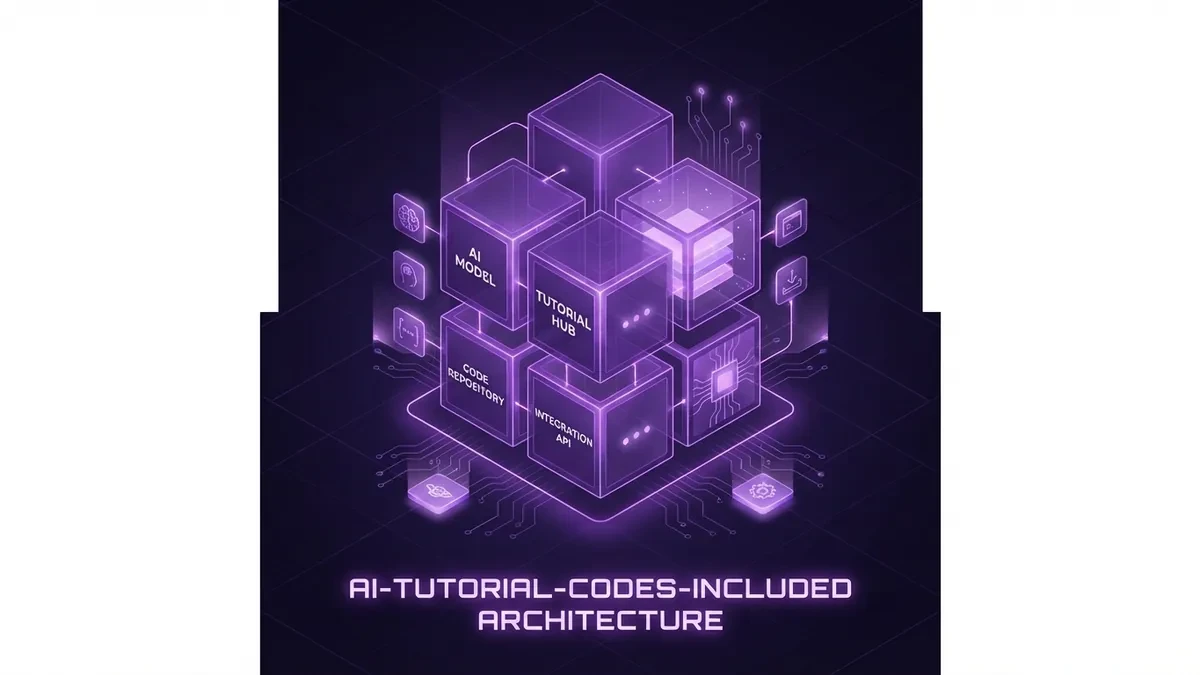
Marktechpost AI Tutorials is trending with 1.9k stars. Unlike typical single-purpose libraries, this repository serves as a comprehensive implementation reference for the bleeding edge of AI engineering, covering everything from Agent-to-Agent (A2A) protocols to LLM red-teaming.
🛠️ What is it?
Marktechpost AI Tutorials is a curated collection of production-grade code patterns and proof-of-concept implementations for modern AI systems. It bridges the gap between theoretical research papers and practical application.
Rather than a single framework, it functions as a modular Knowledge Base for Systems Architects. It provides runnable implementations for complex topics such as:
- Agentic Workflows: Implementations using LangGraph, CrewAI, and Swarm for multi-agent orchestration.
- LLM Security: Red-teaming pipelines using Garak and DeepTeam to test for prompt injection and jailbreaks.
- Inter-Agent Protocols: Concrete examples of the Agent-to-Agent (A2A) protocol and Model Context Protocol (MCP).
- Evaluation: RAG quality benchmarking with DeepEval and MLFlow tracing.
🏗️ Architecture
Since this is a repository of patterns, the architecture varies by module. However, the repository highlights several critical architectural trends in 2025 AI development:
1. The Agentic Control Plane
The repository demonstrates the shift from simple chains to cyclic graphs.
- Core: Uses
LangGraphfor stateful, multi-turn agent loops. - Orchestration: Implements “Supervisor” patterns where a meta-agent delegates tasks to specialized sub-agents (e.g.,
supervisor_framework_crewai_gemini_marktechpost.py). - Memory: Showcases adaptive memory systems (Zettelkasten-style) and reflection loops to improve agent performance over time.
2. Defensive AI Engineering
A significant portion of the codebase is dedicated to Adversarial Evaluation.
- DeepTeam Integration: Automated red-teaming scripts that subject LLMs to single-turn and multi-turn attacks (GrayBox, Base64, Leetspeak) to verify safety guardrails.
- Vulnerability Scanning: Scripts to detect “Crescendo” multi-turn jailbreak attempts.
3. Protocol Standardization
The repo includes a reference implementation for the A2A (Agent-to-Agent) protocol, moving beyond proprietary APIs to standardized communication:
- Agent Card: A standardized JSON metadata file (
/.well-known/agent.json) describing the agent’s capabilities. - HTTP Transport: A standardized request/response schema for agents to negotiate tasks autonomously.
🚀 Quick Start
The following example demonstrates how to spin up a standardized A2A Agent that other agents can discover and talk to.
Prerequisites
- Python 3.13+
uvpackage manager (recommended)
1. Setup the Environment
git clone https://github.com/Marktechpost/AI-Tutorial-Codes-Included
cd "AI-Tutorial-Codes-Included/A2A_Simple_Agent"

# Initialize virtual environment
uv venv
source .venv/bin/activate
uv sync
2. Run the Agent Server
This starts an agent that adheres to the A2A protocol standards.
# Starts the agent on http://localhost:9999
uv run main.py
3. Interact via Client
In a new terminal, run the client to perform a handshake and task execution.
# Create a file named test_agent.py
import asyncio
from client import A2AClient, A2ACardResolver, SendMessageRequest, Message

async def talk_to_agent():
    # 1. Resolve the Agent's "Card" (Metadata)
    resolver = A2ACardResolver(base_url="http://localhost:9999")
    agent_card = await resolver.get_agent_card()
    print(f"Found Agent: {agent_card.name}")

    # 2. Send a standardized message
    client = A2AClient(agent_card=agent_card)
    response = await client.send_message(
        SendMessageRequest(
            message=Message(content="Generate a random number")
        )
    )
    print(f"Agent Replied: {response.message.content}")

if __name__ == "__main__":
    asyncio.run(talk_to_agent())
⚖️ The Verdict
Marktechpost AI Tutorials is a Reference-Grade resource.
- Educational Value: 10/10. It covers niche, high-complexity topics (like A2A and MCP) that have very little public documentation.
- Code Quality: Variable. As a collection of tutorials, some scripts are polished production code (like the A2A agent), while others are experimental Jupyter Notebooks meant for exploration.
- Production Readiness: Low (as a library), High (as a pattern source). You should not import this repo directly into your project. Instead, treat it as a cookbook: copy the specific architectural patterns (e.g., the LangGraph memory implementation or the Red-Teaming harness) and adapt them to your codebase.
Use this for: Rapidly prototyping advanced agentic workflows or setting up an internal LLM evaluation pipeline.
Avoid this for: Looking for a plug-and-play library to add to requirements.txt.
Recommended Reads

Is YuPi AI Guide Production Ready? Deep Dive & Setup Guide
Technical analysis of YuPi AI Guide. Architecture review, deployment guide, and production-readiness verdict. 2.7k stars.

Is Deepnote Production Ready? Deep Dive & Setup Guide
Technical analysis of Deepnote's open-source ecosystem. Architecture review of the reactivity engine, file format, and conversion tools. 2.5k stars.

Is Reasoning From Scratch Production Ready? Deep Dive & Setup Guide
Technical analysis of Reasoning From Scratch. Architecture review, deployment guide, and production-readiness verdict. 2.4k stars.