Is Claude Cowork the Future of B2B SaaS? Deep Dive
Architecture review of Claude Cowork. Pricing analysis, tech stack breakdown, and production viability verdict.
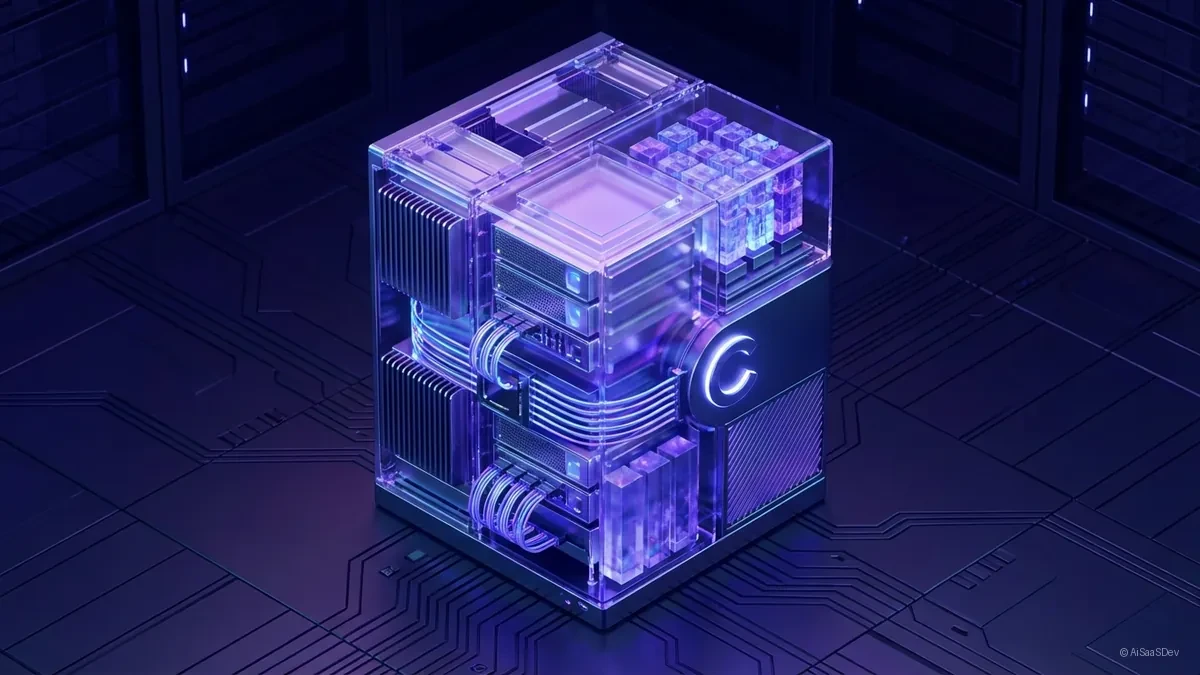
Architecture Review: Claude Cowork
Claude Cowork claims to be AI work assistant that operates your desktop apps. Let’s look under the hood.
🛠️ The Tech Stack
Claude Cowork represents a shift from “Chat UI” to “Agentic Runtime.” It is not merely a text-generator but a multimodal system capable of executing actions.
- Core Inference Engine: Powered by Claude 3.5 Sonnet (and likely Opus 3.5/4.0), utilizing the “Computer Use” capability. This model is trained to interpret screenshots (Vision) and map them to coordinate-based actions (Mouse/Keyboard events).
- Client Architecture: The desktop client (currently macOS focused) likely acts as a control plane. It captures the screen state (pixels), sends it to the inference layer, and executes the returned action commands (click, type, scroll) via OS-level Accessibility APIs.
- Sandboxing & Security: Unlike a simple script, Cowork operates within a containerized environment or strictly scoped VM. It mounts specific folders (e.g., “Downloads” or specific project directories) to prevent accidental filesystem destruction (“rm -rf /”).
- Integration Layer: It moves beyond visual processing with Native Connectors (integrations for Notion, Asana, Google Drive) to bypass fragile UI interactions when APIs are available, ensuring higher reliability for data-heavy tasks.
💰 Pricing Model
Anthropic has positioned this as a premium capability, effectively creating a tiered SaaS model:
- Free Tier: Standard Chat interface only. No “Cowork” agent capabilities.
- Pro ($20/month): Includes entry-level access to Cowork. Likely rate-limited by “compute steps” (agent actions) rather than just token output, as agent loops consume significantly more inference time.
- Max ($100/month): The “Power User” tier. Unlocks higher rate limits and extended context windows, necessary for long-running background tasks (e.g., “Organize this entire folder of 5,000 PDFs”).
⚖️ Architect’s Verdict
Deep Tech.
This is not a wrapper. A wrapper typically sends text to an API and displays the result. Claude Cowork is a System 2 Application that fundamentally changes the interaction model between human and machine. It requires:
- State Management: The AI must remember where it is in a multi-step workflow (e.g., “I opened the file, now I need to copy the data”).
- Error Correction: If a button click fails or a modal pops up, the Vision model detects the anomaly and self-corrects.
- Latency Engineering: Streaming video frames and receiving action tokens with low enough latency to feel “responsive” is a massive engineering hurdle.
Developer Use Case: While “Claude Code” is the CLI tool for engineers, Claude Cowork is the “Glue Work” automator.
- QA Automation: Visually test your web app by telling Claude to “Go to localhost:3000 and try to break the signup flow.”
- Documentation: “Watch me perform this workflow, then generate a step-by-step Markdown guide with screenshots.”
- Asset Management: “Rename all these raw SVG exports based on their visual content and move them to the
/assetsfolder.”
It is production-ready for individual workflows but requires supervision for critical data operations due to the non-deterministic nature of LLMs.
Recommended Reads
Is TranslateGemma the Future of DevTool? Deep Dive
Architecture review of TranslateGemma. Pricing analysis, tech stack breakdown, and production viability verdict.

Is StealthHound the Future of DevTool? Deep Dive
Architecture review of StealthHound. Pricing analysis, tech stack breakdown, and production viability verdict.
Is 1Code the Future of DevTool? Deep Dive
Architecture review of 1Code. Pricing analysis, tech stack breakdown, and production viability verdict.